
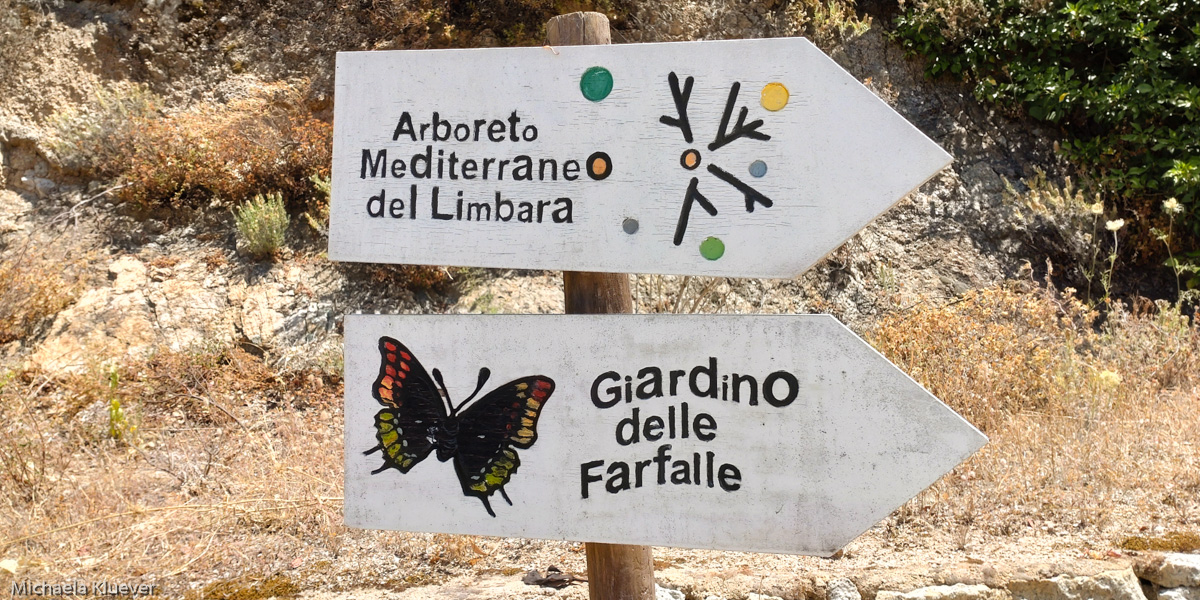
The butterfly garden in Limbara, Sardinia
The granite mountains of Limbara, with their distinctive jagged profile, rise above the cultural landscape of vineyards and cork oaks in northeastern Sardinia, between Tempio Pausania and Berchidda. Within the municipality of Berchidda, the Limbara South State Forest (Foresta Demaniale) stretches from 300 to 1336 meters above sea level . There you’ll find the Giardino delle Farfalle – literally translated as Butterfly Garden. However, I think “garden” doesn’t quite do justice to this wonderfully designed, expansive space. It’s a natural oasis for butterflies and butterfly enthusiasts. In June, Peter from Leonberg traveled here to photograph butterflies with me for a week. We were both so thrilled by the experience that we agreed right then and there to write a joint report for this photo blog to share our impressions
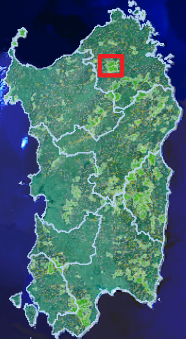

Perhaps you’re now wondering where exactly this paradise for butterfly photographers is located and how to get there? On the Olbia-Sassari road, the exit to Berchidda is signposted. Berchidda is a mountain village on the slopes of Monte Limbara with around 2,600 inhabitants, which has gained some renown through the Time in Jazz Festival with its international artists. The signs for Monte Limbara will guide you through the village and about three kilometers further uphill into the mountain forest. More signs point the way along the last section of the unpaved road to the Giardino delle Farfalle (Butterfly Garden), where you can park your car in front of the gates.
What can visitors expect in the butterfly garden?

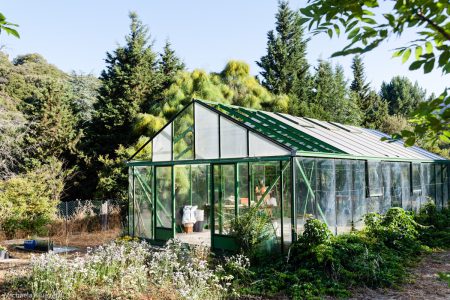
The garden is designed with trees, shrubs, and flowers so that visitors can observe butterflies flying freely among the sap- and nectar-producing plants or laying their eggs on the caterpillars’ food plants. Information panels provide insights into the species and their habitat requirements. A small stream flows through a ravine, this mini-gorge dividing the garden in two. The upper section also features a collection of fruit trees and a greenhouse.
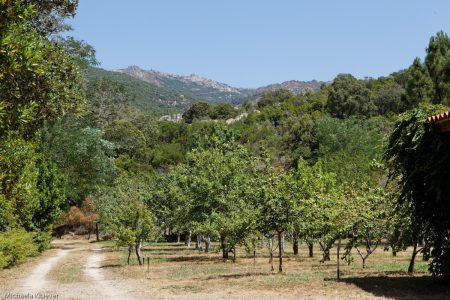
The Limbara preserves a rich flora and fauna.
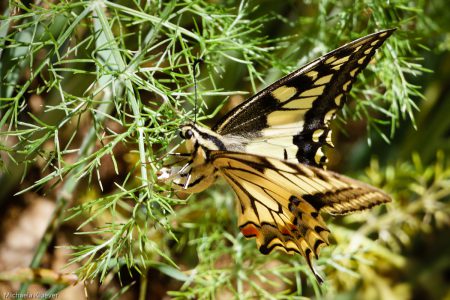
The abundance of butterflies here confirms the area’s intact and rich natural environment, I read on site. I also learn that the name Limbarae , meaning “from the Limbara,” has been incorporated into some scientific plant names. In other words, the Limbara region preserves a rich flora and fauna. Part of this is the many butterfly species found there. Some are endemic, meaning they are found only in Sardinia (and partly also in Corsica). “To protect this valuable natural wealth, the Butterfly Garden was created in 2009 on the grounds of the old nursery.” (Quoted from the brochure Guida alla scoperta , Sardegna Foreste). The brochure further states that the aim of the garden is to provide information about butterflies and raise awareness for their protection.
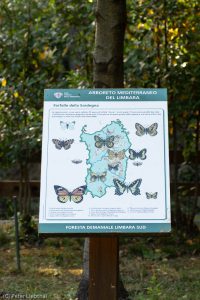
This sign in the butterfly garden names 13 butterfly species endemic to Sardinia (and partly also to Corsica).
Here is the transcript:
- Eucloe insularis
- Lasiommata paramegaera
- Aglais ichnusa
- Hipparchia aristaeus
- Hipparchia neomiris
- Zygaena orana
- Zygaena corsica
- Argynnis elisa
- Pseudophilotis barbagiae
- Maniola nurag
- Danaus Chrysippus
- Papilio hospiton
- Coenonympha corinna
During a conversation with the manager of the Agenzia Foresta, we learned that there is much more to discover in Limbara South . Hiking trails in the lower part of the state forest lead through Mediterranean scrubland with rockroses, lavender, thyme, and broom, and further up through holm oak forests with strawberry trees and the occasional aspen. It’s a habitat for wildcats, martens, deer, and mouflon, as well as rare, sometimes endemic, plants. A hiking trail connects the butterfly garden with an arboretum visitor center. Here, visitors can learn about Sardinian trees and heritage fruit varieties. Along another themed trail, there is information about the mouflon that have been reintroduced to the forest. We didn’t even explore all of this during our visit – we were completely focused on butterflies. So there’s still so much to discover. I will definitely come back. We thank the helpful and friendly garden staff and the manager for the informative conversations!
Relaxed photography in a natural oasis
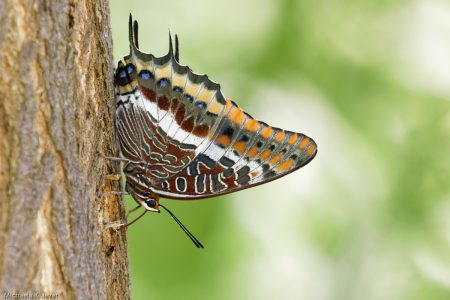
What made this place special for us was that a) there are a great many butterfly species, some of which b) are also present in large numbers. The numerous shady seating areas were ideal for pausing briefly and reviewing the photos on the camera display. Peter had hoped to photograph at least one strawberry tree butterfly. This wish was more than fulfilled on the very first day when we saw two of them sitting calmly on a tree. They were obviously deliberately using small injuries in the bark to suck sap with their proboscis. In the following days, we saw them there so frequently that we eventually stopped even bothering to take pictures.
Accommodation tip
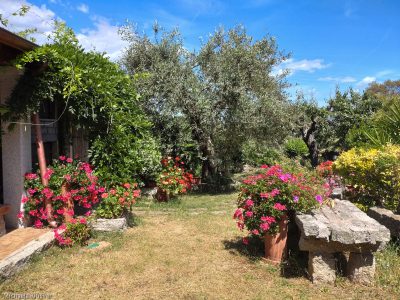
We felt very comfortable in our lovely accommodation, the B+B San Michele . It’s situated in a secluded and romantic location 7 km outside of Berchidda, near the field church of San Michele, from which it takes its name. The absolutely peaceful setting made it an ideal retreat for us to rest and review our photos.
The path to new image ideas
Some might be thinking, “How crazy do you have to be to return to the same place six days in a row to photograph butterflies?” We saw it as an opportunity to improve our skills day by day. We used the mornings for photography, and in the afternoon heat, we retreated to the rooms of our B&B, San Michele, to review the morning’s photos on the computer and do some initial editing. This allowed us to reflect on the day’s results in the evening and discuss ways to improve certain shots, new strategies, and new ideas. One of our classic to-do lists for the next day was: “I want to pay more attention to ensuring the background blends calmly and harmoniously around the butterfly.”

We were able to implement some of the new ideas the very next day. Others, caught up in a fit of “hunt fever” at the sight of so many butterflies, fell by the wayside. These then resurfaced the day after next. In the end, we both agreed that six days of photography had been just barely sufficient with this approach.
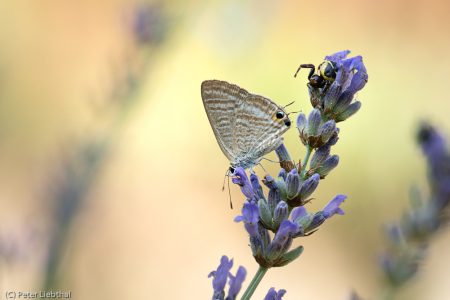
After creating an appealing portrait of a species against a calm background, we tried to tackle new, more challenging image ideas: animals in flight, two or more animals in the same depth of field, interactions. We found the small dramas and encounters in the sea of blossoms particularly interesting. Did the blue butterfly notice the lurking crab spider? The power of the stronger, when the comparatively bulky carpenter bee pushes the delicate butterfly off a flower. Troublemakers interfering with a mating. Once you look more closely, nature holds an endless number of stories.
Strategies in image composition
Here are some thoughts from Peter: Landscape photographers know it – using a tripod leads to better image composition. Why is that? Because the tripod forces you to photograph more slowly and therefore more deliberately. The placement of the foreground within the frame of the landscape being photographed can be deliberately influenced by choosing the tripod’s position, resulting in a better composition.
Photographing butterflies is considerably more difficult, as butterflies, if they even manage to sit still on a flower, never do so for long. So, the camera is taken down from the tripod, and one tries, more or less frantically, to capture the butterfly on the flower. Another strategy is to set up the tripod, optimize the framing, i.e., the background, and wait until a butterfly lands on the flower as desired. However, this strategy only has a chance of success if there are many butterflies in the area. And even then, the photographer’s patience is often severely tested.
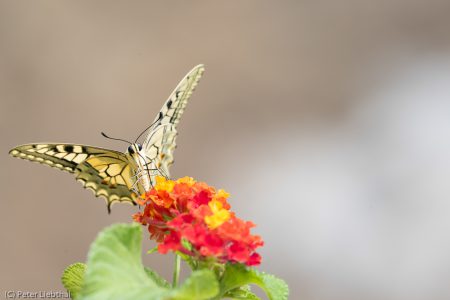
One such place is the butterfly garden in Berchidda. The targeted planting of caterpillar food plants and nectar plants for butterflies results in a high number of individuals. Popular nectar plants include lavender, ice plants, and daisies for blues, as well as strawflowers and lantana for various brush-footed butterflies and the swallowtail. Here, butterflies flutter in abundance, and the likelihood of a butterfly landing on a particular flower is higher than elsewhere. Initially, the sheer number of butterflies can be overwhelming when photographing them, but once this initial phase is over, one can concentrate on composing the image.
Finally, here’s a gallery of our favorite photos from the butterfly garden in June 2025. We welcome your questions or comments on individual pictures!
See comments >