
The second chance – green whip snake in Sardinia
Has it ever happened to you that you had an exciting photo opportunity in front of your lens, and then, at the crucial moment, you messed up the shot? Too little depth of field, awkward camera positioning—there are so many ways to overlook something in the excitement of the moment. I’m a big believer in not simply deleting failed photos, but rather analyzing them when reviewing them to see what could have been better in terms of camera settings, perspective, and composition. This way, you can be better prepared and wait for a second chance.
The first Chance
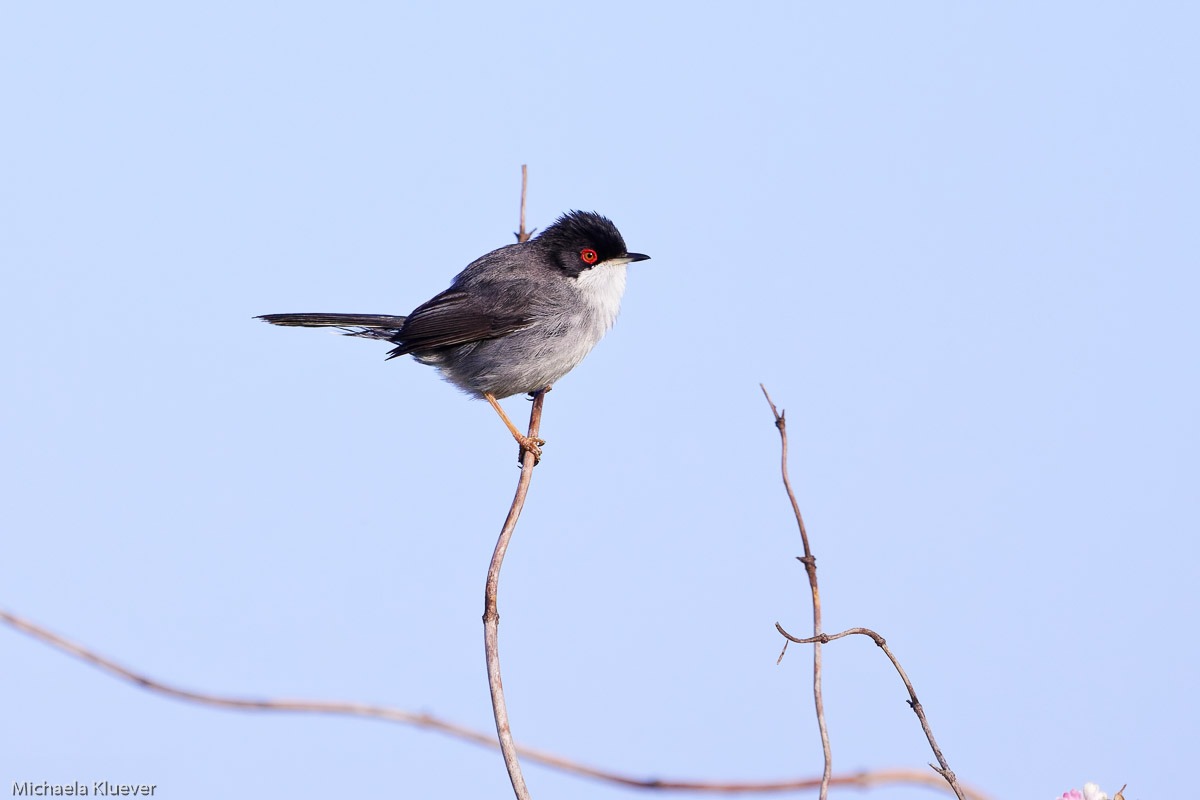
Ten years ago, while on the lookout for the beautiful little Sardinian warblers, I suddenly found myself confronted with two green whip snakes, fiercely entangled. Luckily, my telephoto lens was already at hand. A mating? More on that below. In any case, it’s not something you see every day.
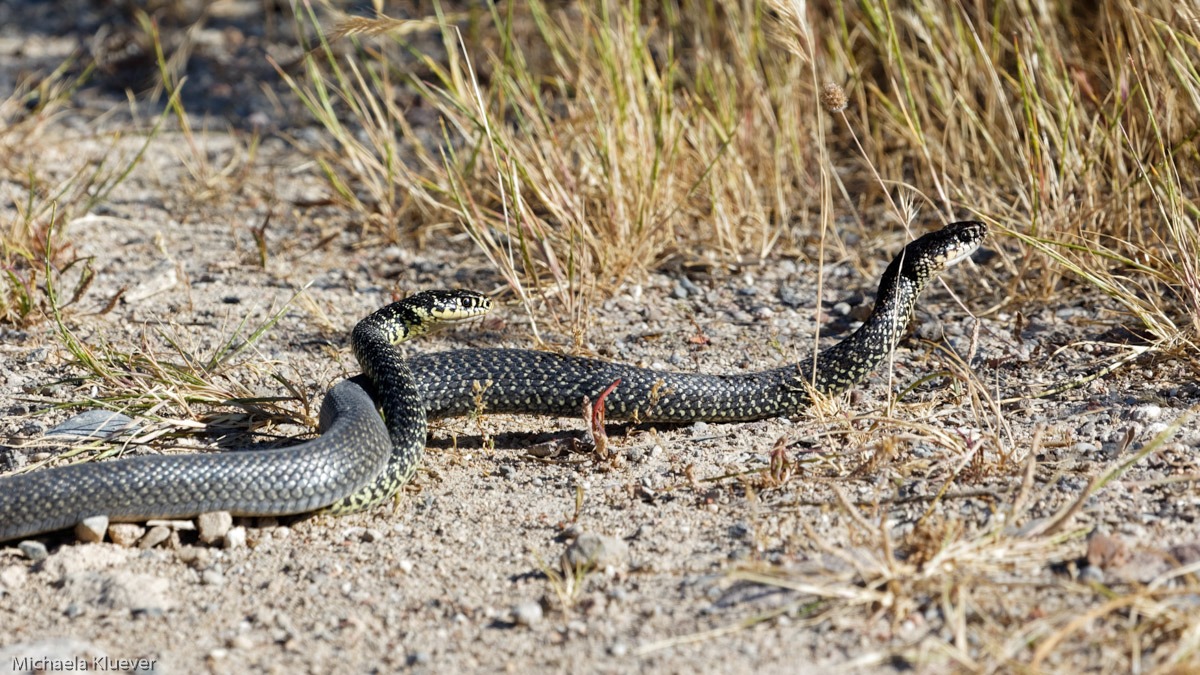
Whip snakes grow up to 1.80 meters and can reach speeds of up to 11 km/h, according to sources as: Wikipedia and Lacerta bilineata. Two such large snakes in motion are awe-inspiring. Getting any closer wasn’t an option for me back then. If snakes feel disturbed during mating and try to slither away, it can be painful for them. The idea of taking the photos down, at eye level, didn’t occur to me at the time. That would have allowed me to focus better and isolate the animals more effectively from the background. Bad luck! The second chance didn’t come until a 10-year wait.
Snake species in Sardinia
Plenty of time to research on snakes in general and specifically whip snakes in Sardinia. According to my sources, these five snake species, all non-venomous, are (naturally) found in Sardinia:
- Sardinian grass snake (Natrix natrix cetti), up to 2 meters, very rare
- Aesculapian snake (Zamenis lineatus), up to 2 meters long, rare to very rare, various shades of brown, also climbs trees
- Viperine snake (Natrix maura), up to 1.30 meters long, often found in/around aquatic habitats, brownish-red
- Horseshoe whip snake (Coluber hippocrepis), up to 1.40 meters long, was formerly classified with the green whip snakes, has a more colorful pattern, and also climbs trees.
- Green whip snake (Hierophys viridiflavus), up to 1.80 meters long, according to other sources up to 2 meters long.
The green whip snake
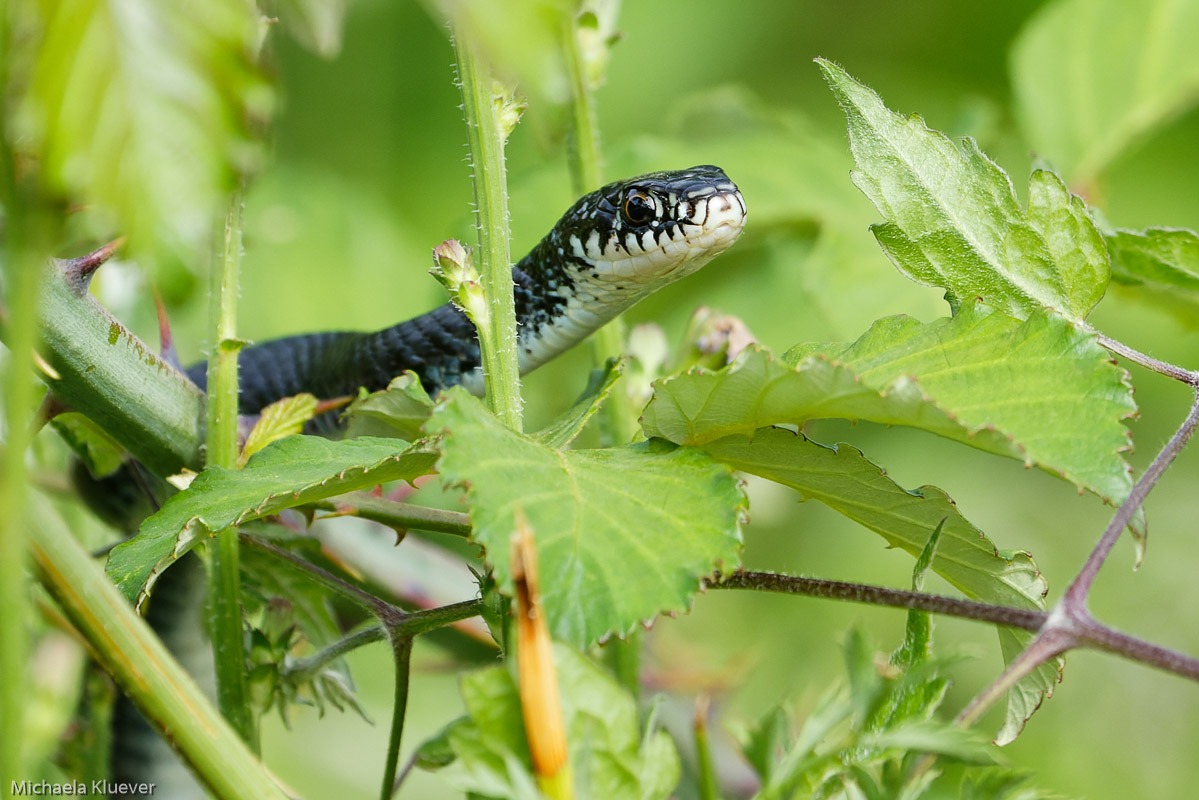
The green whip snake isn’t really green. Adults appear more black and yellow. There’s also supposed to be a predominantly black form. It’s best not to provoke them, I’ve been told. It’s considered irritable. It might bite, and that’s not supposed to be pleasant, I read on this reptile website. They’re not uncommon in Sardinia; I see them from time to time, usually only for fractions of a second. It often happens so quickly that afterward, it’s impossible to say for sure which of the aforementioned species it was. So much for the idea that they’re aggressive, angry, and prone to biting. I can’t confirm that from my own observations. Occasionally, you can find beautiful, silvery-shimmering pieces of shed skin in the grass. Unfortunately, sometimes you also find run-over specimens on the road.
The viperine snake
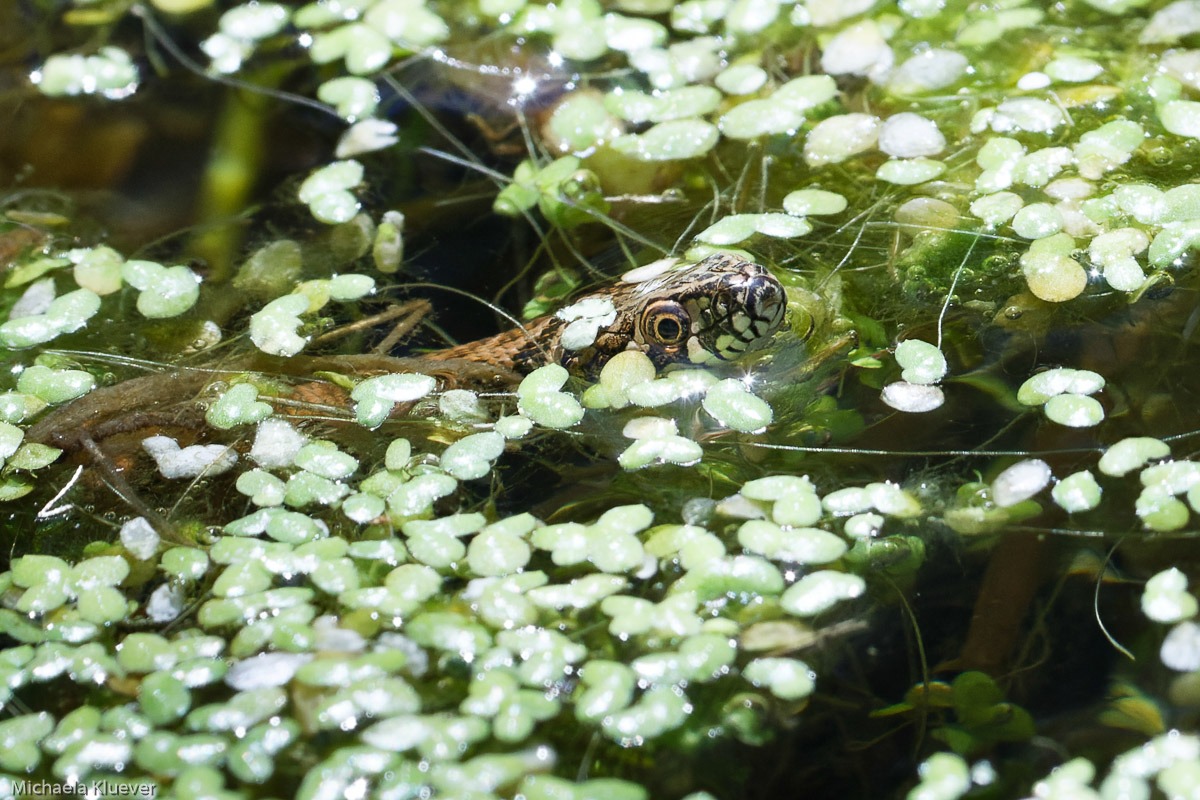
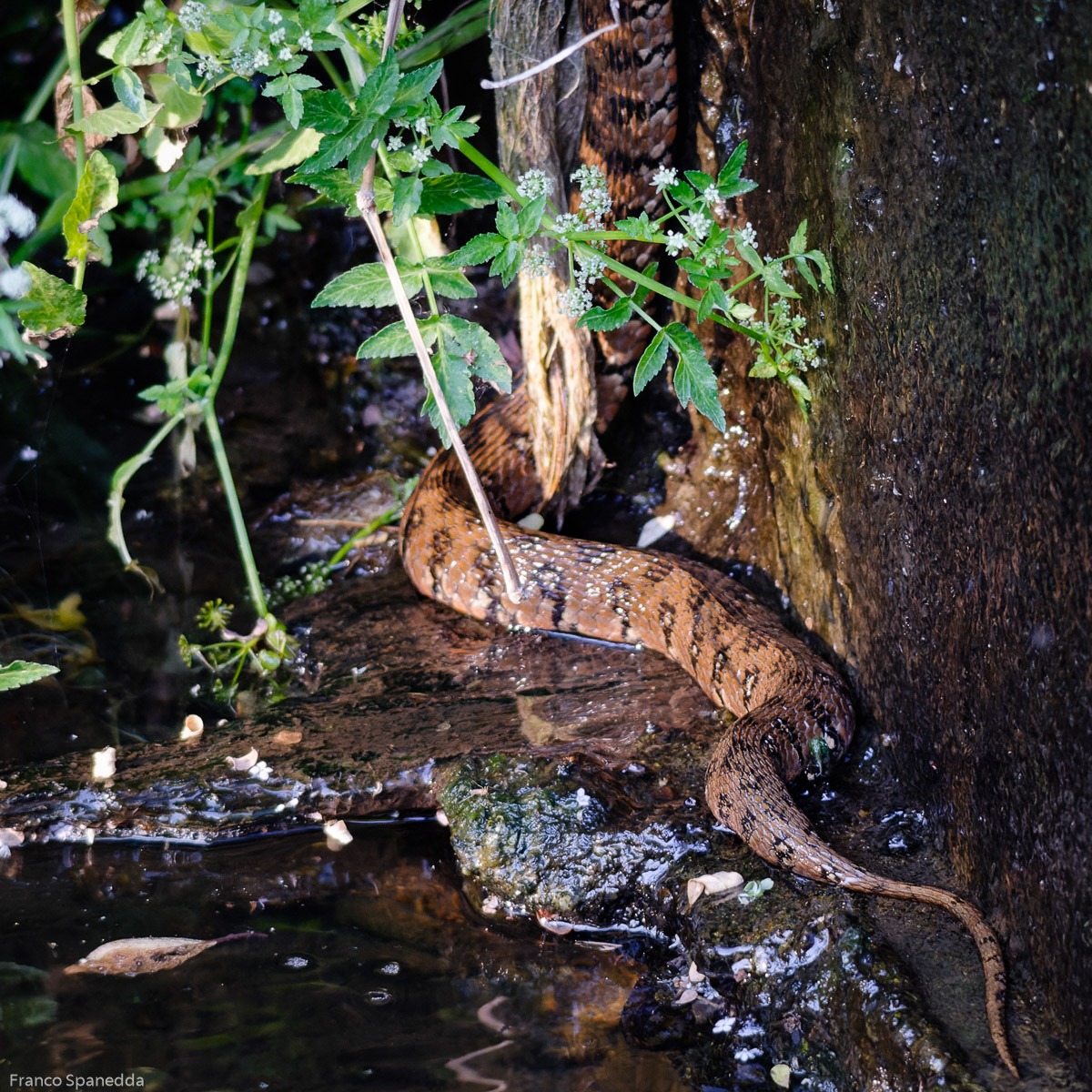
The second snake species I encountered in Sardinia was the viperine snake (Natrix maura ), which lives in and around aquatic habitats. The two juveniles, I observed through my telephoto lens, displayed threatening gestures. This wasn’t exactly encouraging, making me want to get even closer and continue photographing them down at eye level. Especially since I was only able to consult the identification guide, which indicated the species was non-venomous, afterward. Online, the mock threat behavior, “with hissing and imitating a venomous bite,” is described as “harmless to humans” (source: Reptilica). I found the display by the two youngsters convincing. Since viperine snakes can live to a considerable age and grow up to 1.30 meters long, I’m waiting for my second chance, hoping that an older, larger specimen will be easier to photograph. My photographer friend Franco Spanedda managed to do just that in Santa Caterina by the river. He described it “at least 1 meter long and as thick as a beer bottle”. Here is a photo of the animal slipping away, taken in low light with ISO 2000@f6.3 and 1/90s. Thanks for the photo, Franco!
Second Chance
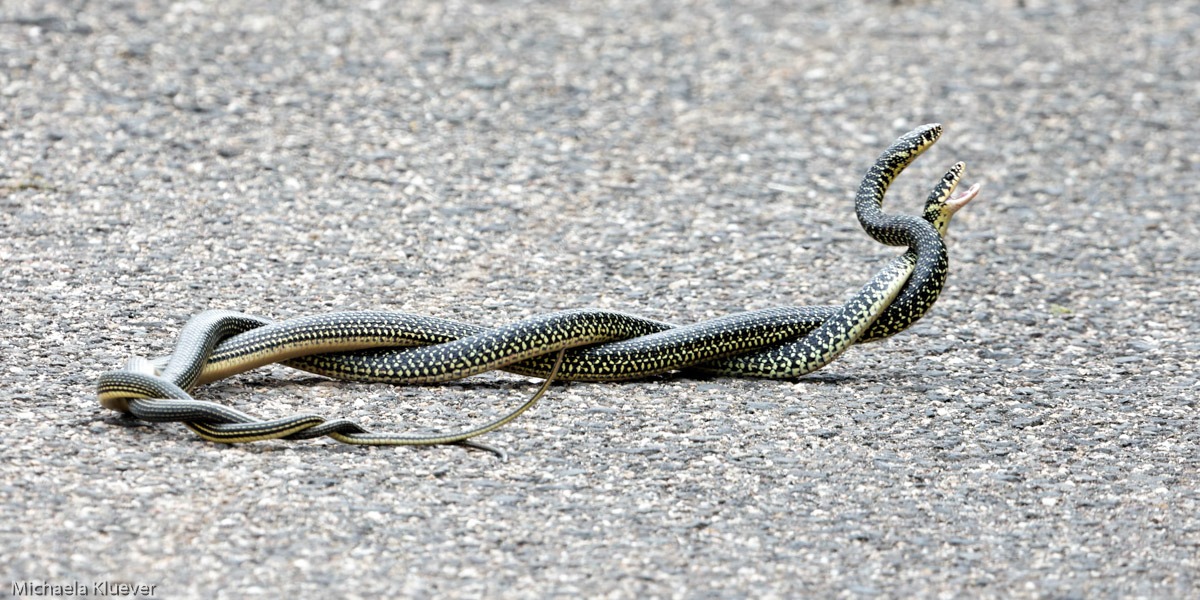
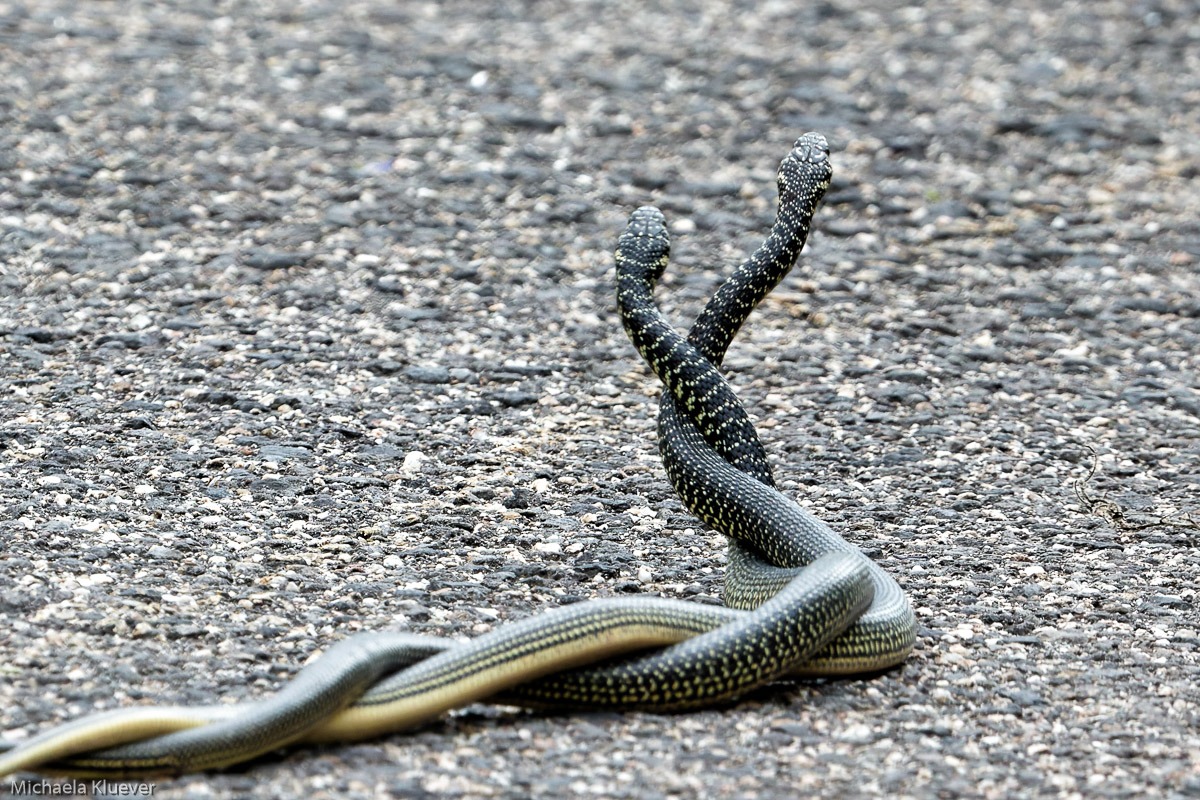
Ten years after the first encounter with the wildly entwined green whip snakes, a second chance came last May – and immediately raised new questions. Two whip snakes, entwined around each other, swayed back and forth on the ground with powerful movements.
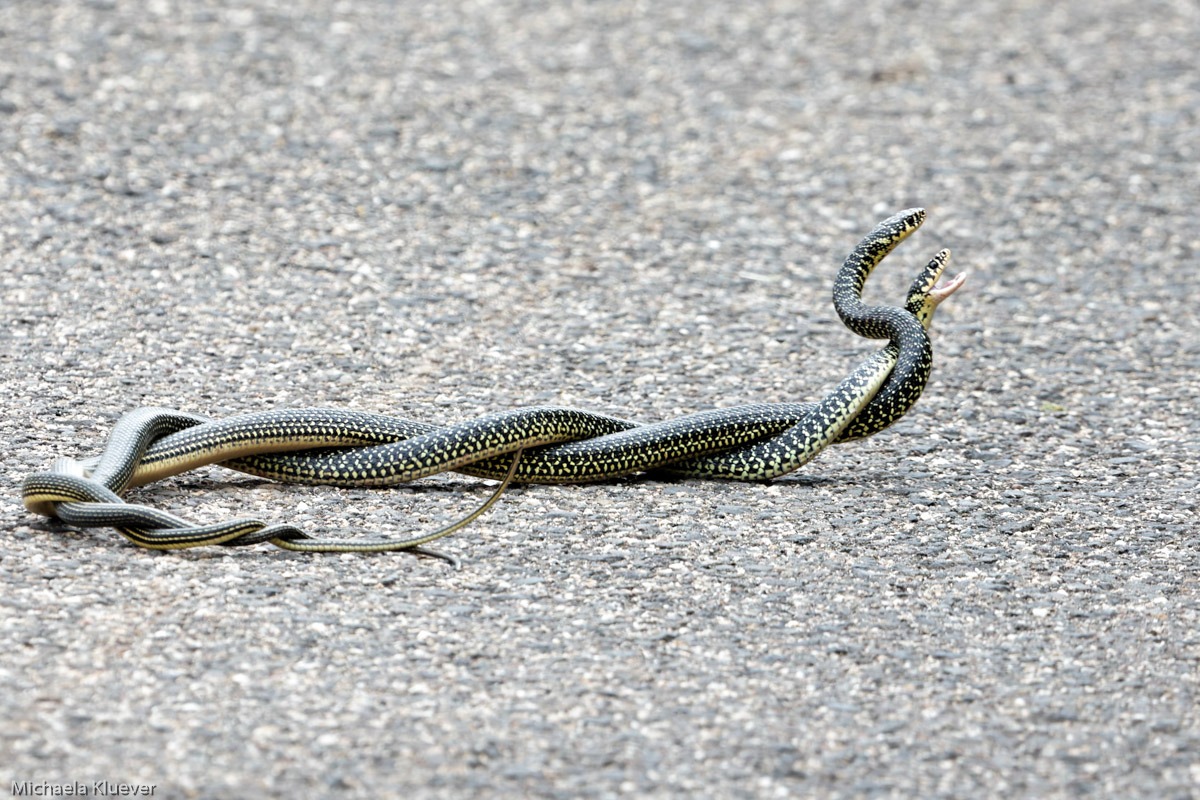
This time it was clear that the camera should be as close to the ground as possible. Which still was some effort of will. Stepping back, in case the snake dance moved towards me, is simply slower when you’re trying to jump up from a crouching position.
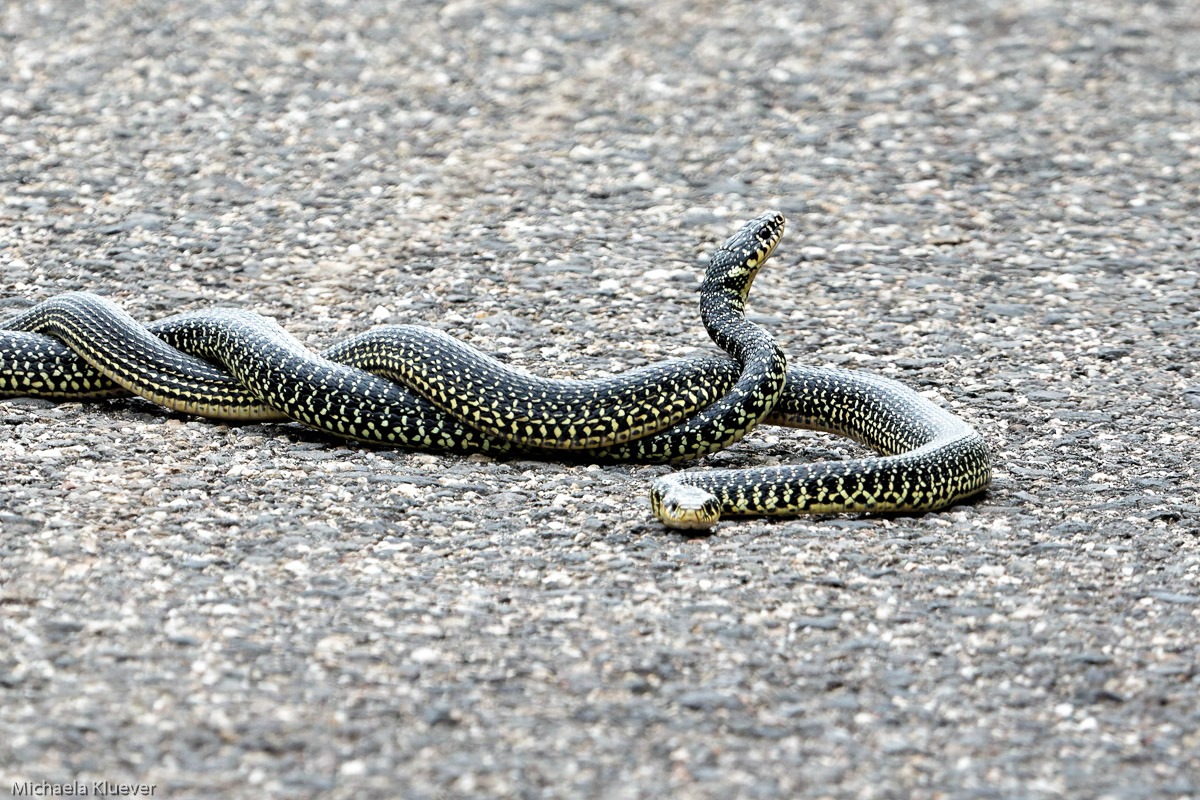
But, as planned, this position made it much easier to focus precisely on one eye and then track the rapid movements with the focus point. It was almost impossible, however, to capture both animals’ eyes simultaneously within the depth of field. Presumably, the animals are also less disturbed when observers are crouching rather than standing upright, thus appearing smaller. This time, the background was a dirt track. Aesthetically, I found it a bit boring. There’s always something, though. 🙂
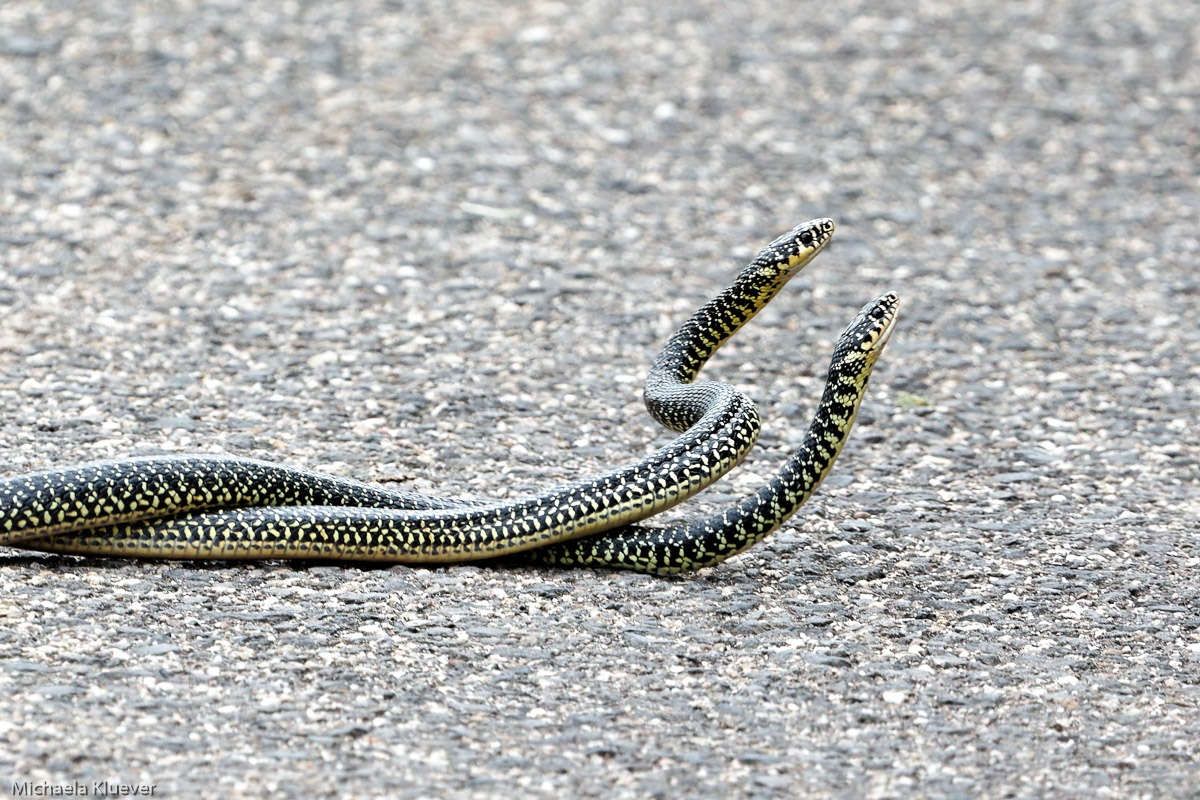
The power, elegance, and speed of the movements were captivating. The whole thing had the feel of a dance or combat ritual, with changing figures on display. When processing the RAW data, my initial approach was to crop the images 16:9 because the long snake bodies would exceed the classic 3:2 format if everything from head to tail was to be included. In the end, however, I preferred the 3:2 format with a crop that shows the front part of the two snakes.
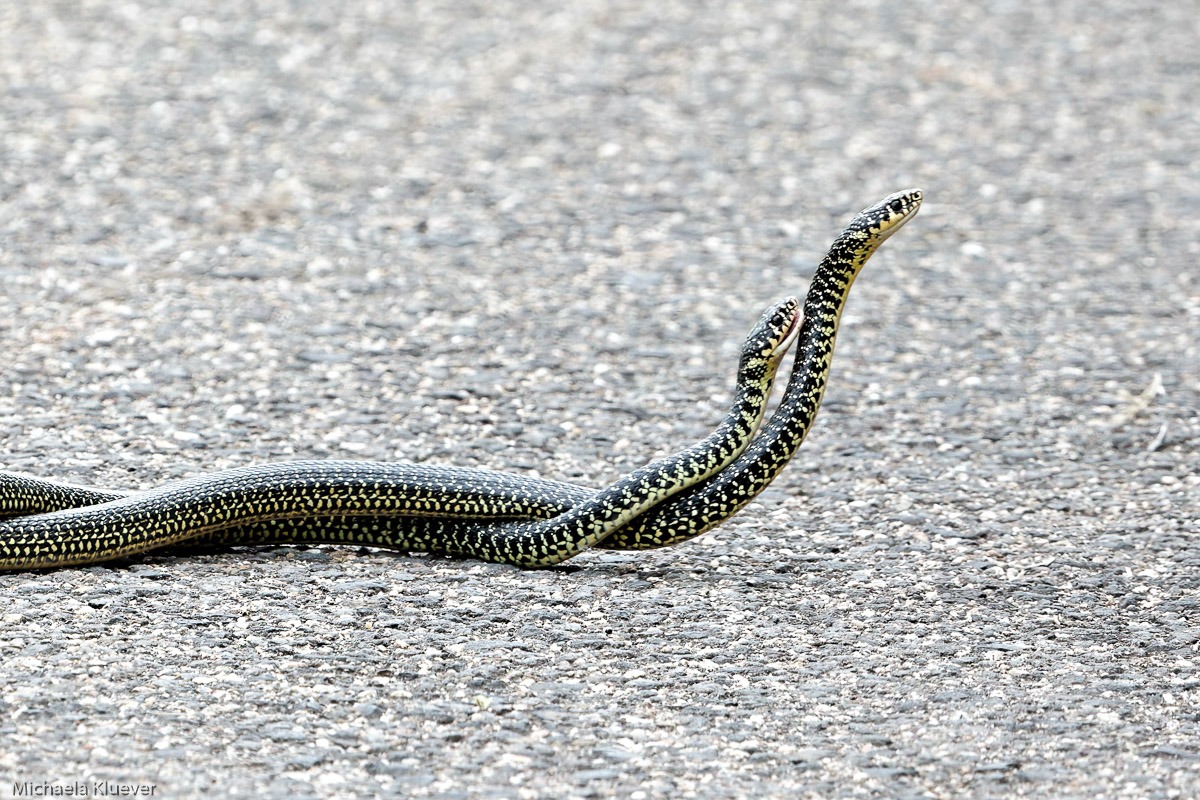
The animals gave me more than 10 minutes to take several photo sequences before disappearing into the undergrowth. At first, I thought I was photographing a mating. The mating season lasts from end of winter to mid-May, so that would fit. Later, I studied my photos and the information about this species more closely and learned that similar behavior is also observed in males as a ritualized display of power (combat). So, what had I photographed? Mating or a combat?
I showed the photos to someone who has seen many whip snakes. “It’s obvious,” he said. “If the two look the same and are the same length, they are two fighting males. If they have different markings or differ in length, it’s a mating. The smaller animal then is the female.” If that’s correct, photo number 2 above shows a mating. While my “second chance” captured the combat of two male whip snakes.
Waiting for chance number 3
As a beginner when it comes to whip snakes, it’s difficult for me to judge. Perhaps nature will grant me a third chance this May? An opportunity to pay even closer attention to the crucial details, differences, or similarities? The exciting thing about nature photography is the constant, never-ending learning process—both in terms of photography and in understanding nature. Observing, researching, and discovering connections is at least as interesting as the resulting photographs, which, taken together, might even tell a story.