
The special moment – Wild horses in Sardinia
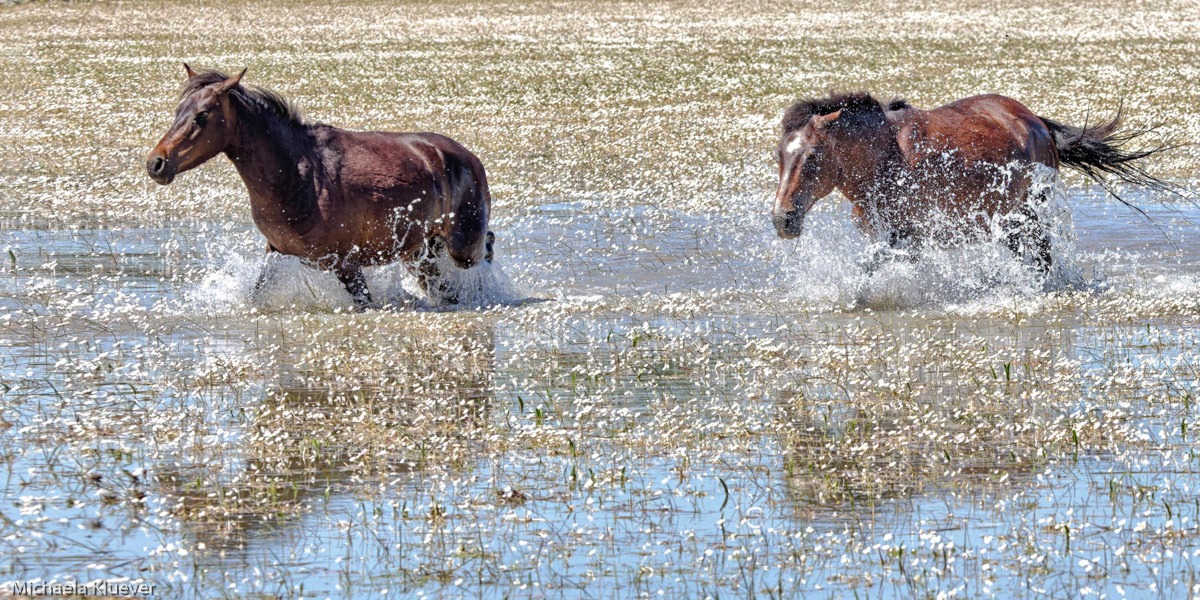
The Giara di Gesturi plateau, situated at an altitude of 500-609 meters above sea level, offers a protected habitat for the small Sardinian wild horses as well as numerous endemics of fauna and flora, thanks to its steep slopes. This spring, I spent five days there with a very specific goal: to photograph wild horses capturing the moment when the animals are in rapid motion and engaged in fights.
The origin of wild horses in Sardinia
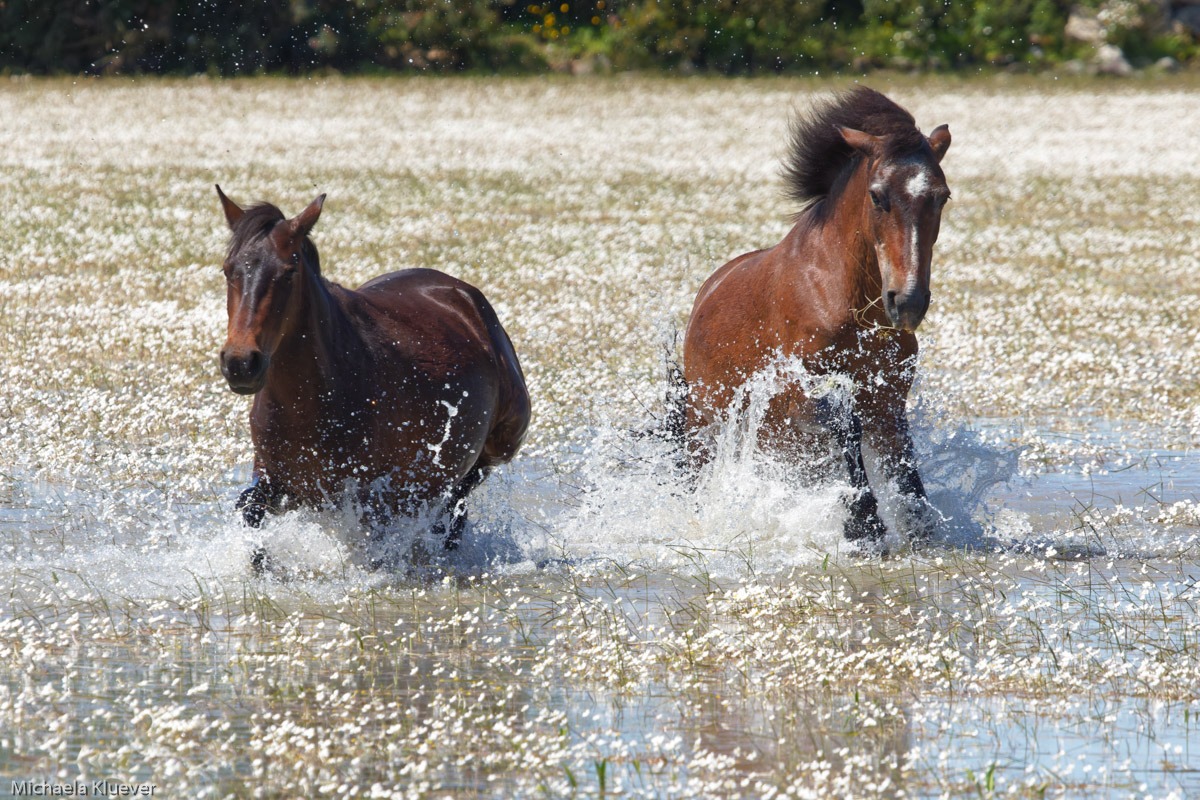
The Giara Horse (Equus caballus jarae) is an equine breed of uncertain origin, perhaps arrived on the island with the Phoenicians during the Iron Age. It was present in various areas of the island until the 19th century. By the mid-1960s, its population had dwindled to 150-200 animals. Warnings from scientists and conservationists prompted conservation efforts. Currently there are living 450 to 600 wild horses on the Giara plateau.
The characteristics
The booklet “I Cavallini della Giara” describes the characteristic features as follows:
- Average height at the withers from 1.20 to 1.40 meters
- long mane and tail
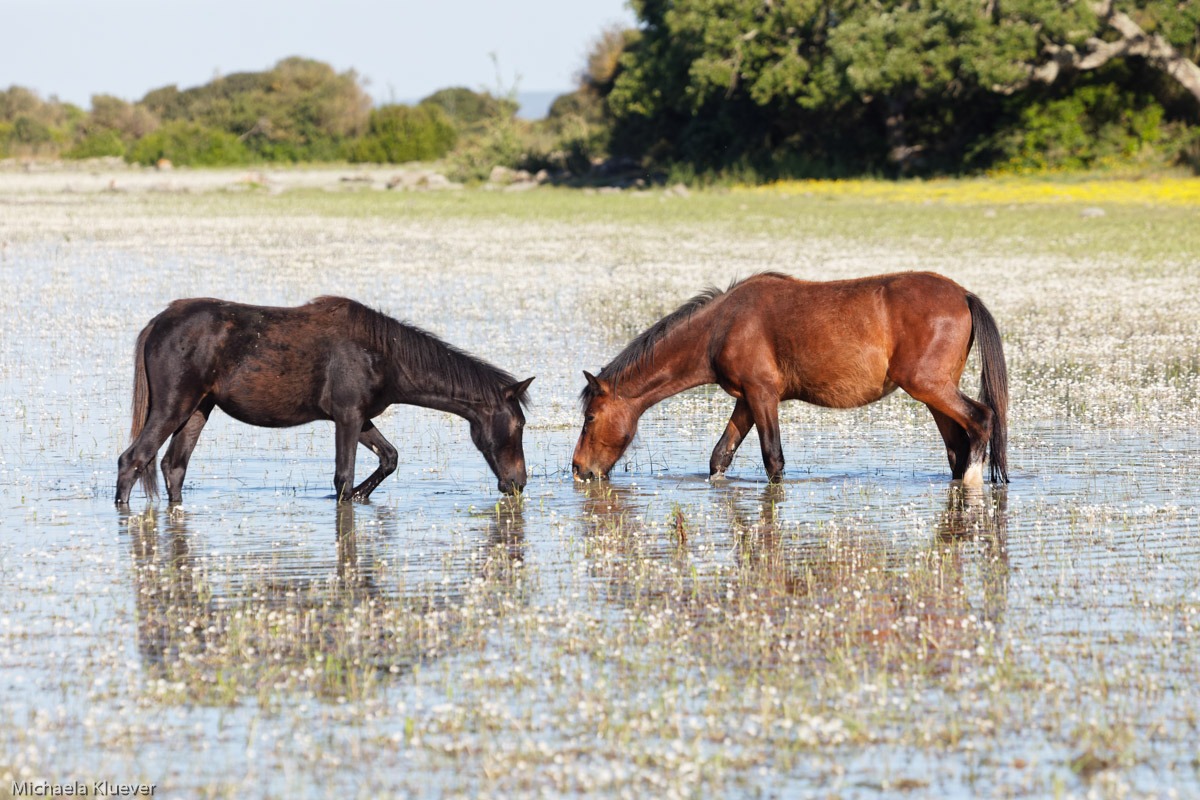
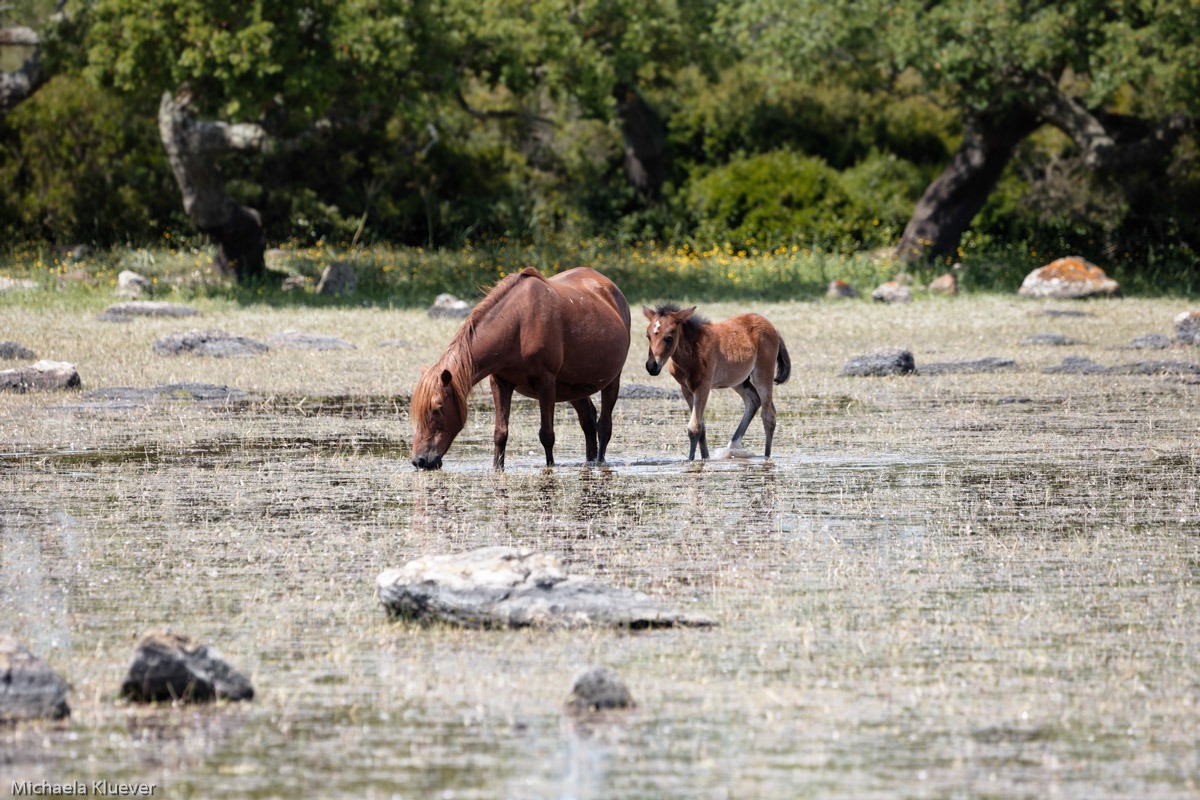
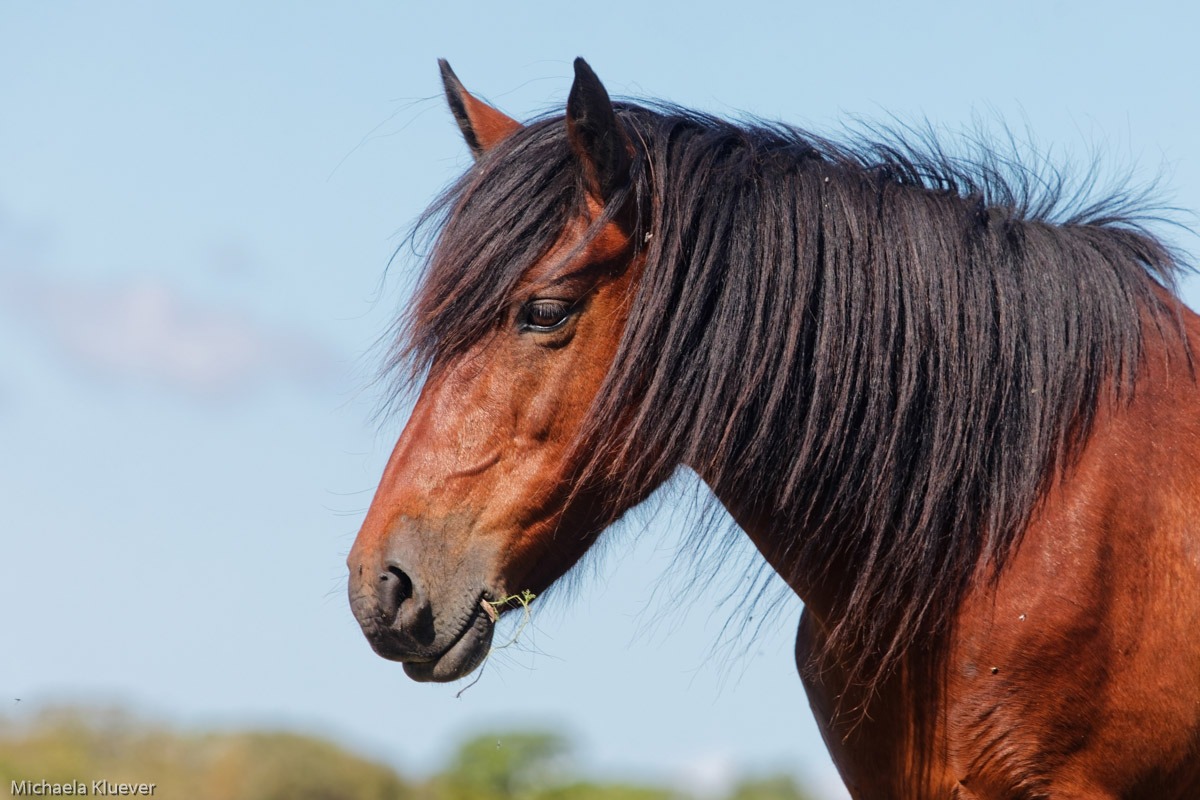
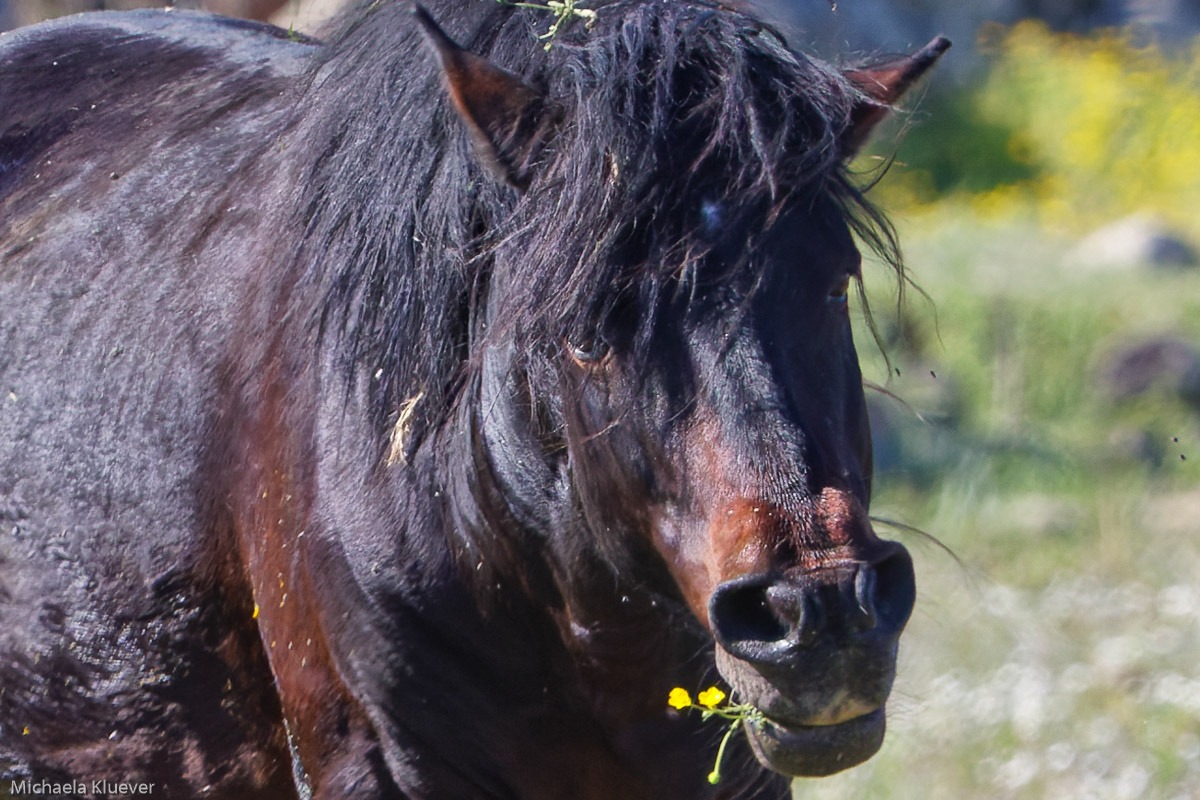
- Three color variations; to be seen in the two photos above.
- Coat, mane, tail completely dark
- Coat reddish-brown, mane, tail and feet dark
- Coat completely reddish, mane, tail flaxen
With some animals, the mane hangs like a curtain in front of the eyes, protecting them from bothersome flies. The long tail can reach the ground and is also used to swat away flies.
No sightings guaranted
The 4,300-hectare “Parco della Giara” has a maximum length of 14 kilometers and a width of 6.5 kilometers. Evidence of human settlement includes 22 nuragic remains located at viewpoints along the 37-kilometer perimeter of the plateau. At the entrance to one of the four access points, during my first visit eleven years ago, I somewhat naively asked the friendly ranger where the horses could be seen. “They’re wild animals; they’re here one day, there the next,” he replied with a smile. This means there’s no guarantee of spotting horses. The Giara is not a zoo. Visitors are advised to maintain a respectful distance, as indicated on the information boards. The herds’ locations vary depending on the season, time of day, and the availability of food.
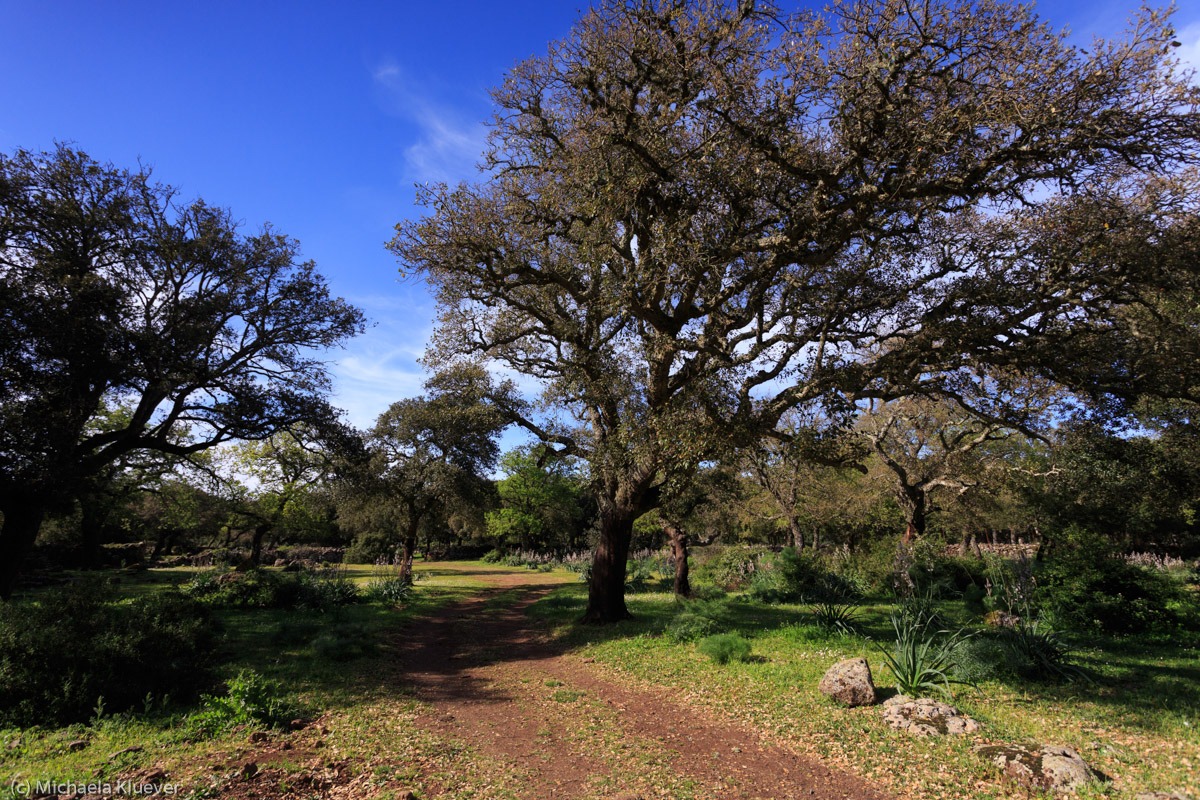
My favorite time of year to visit is spring, with excursions at first light and again in the late afternoon and evening hours. A longer hike through cork oak forest, across clearings with flowering asphodel, leads to the marsh meadow ponds (paulis), where, with a bit of luck, you can see horses. A young wild horse reflected in the water amidst white water daisies (Ranunculus revelieri) in the morning light is a breathtaking sight. The golden hour light in the evening, on a black wild horse in a sea of yellow blossoms, is equally stunning.
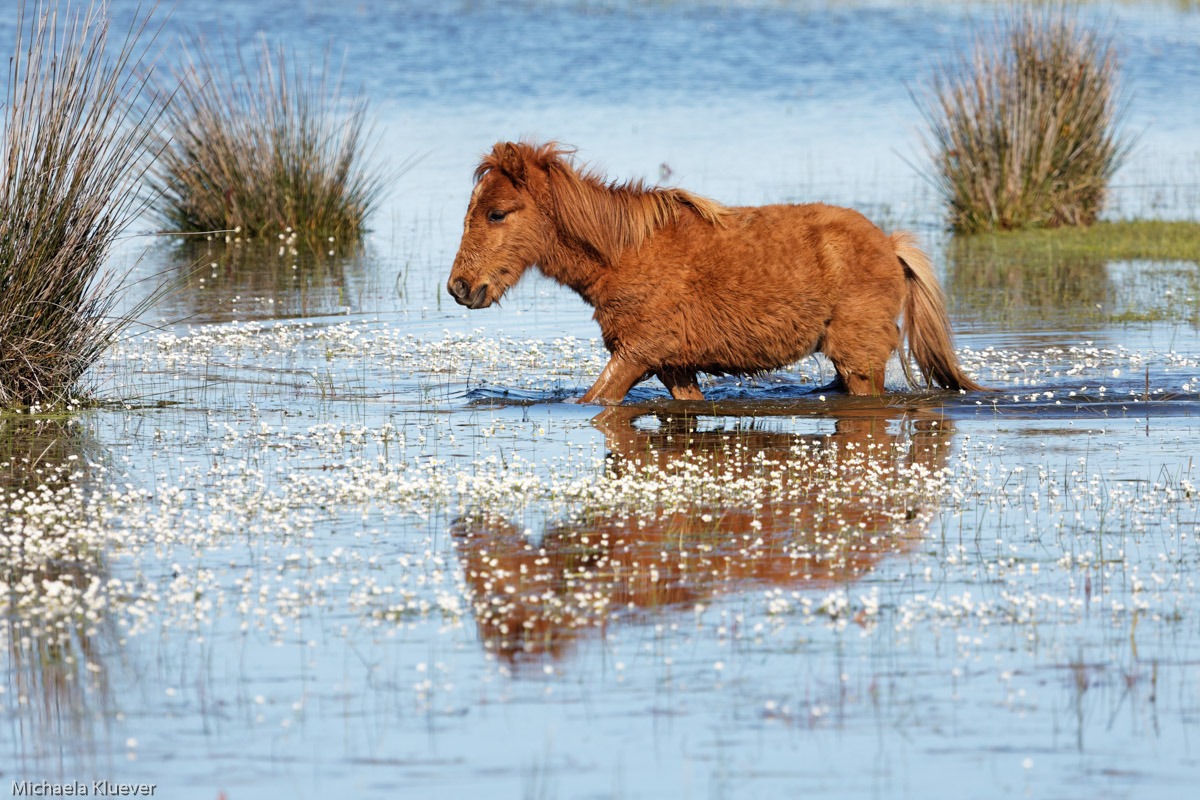
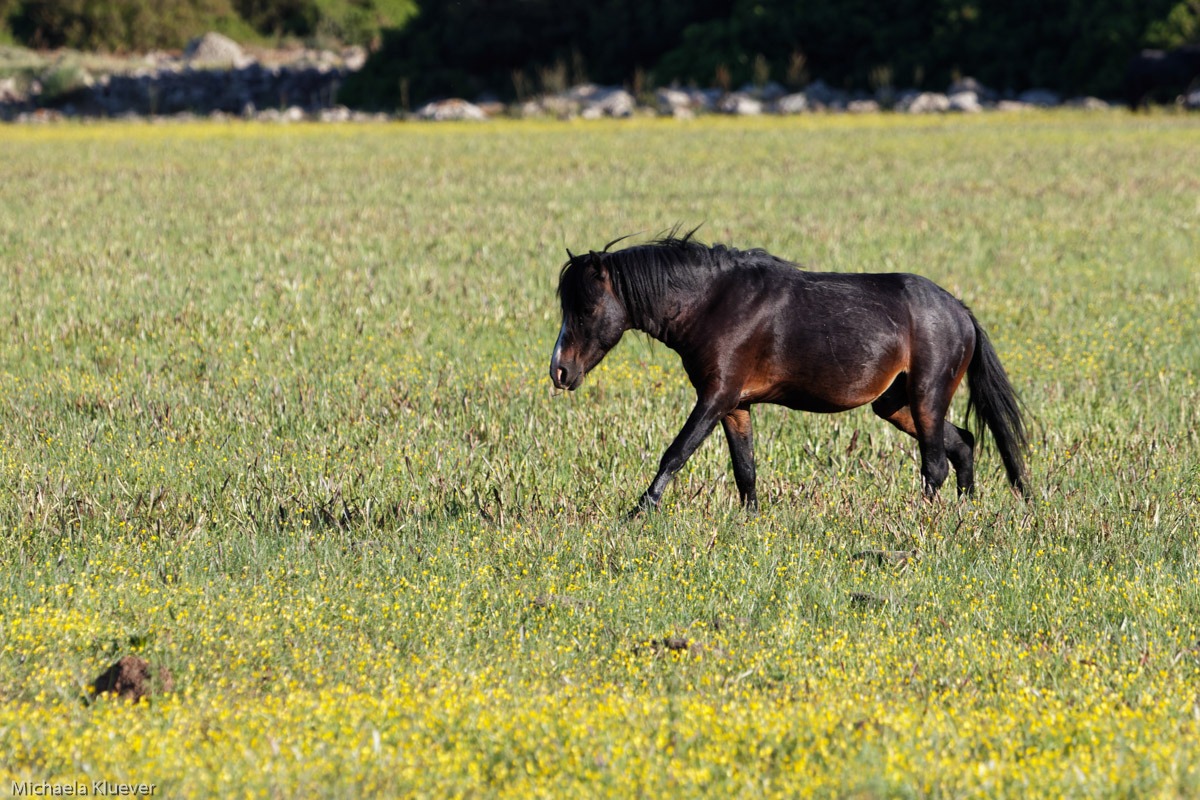
The Fondazione Altopiano della Giara explains the term “Pauli” as follows: “The Paulis are particular habitats that characterize the Giara plateau. These are temporary ponds located in the depressions of the lava flow caused by the Pliocene eruptions of the visitable craters of Zeppara Manna and Zepparedda. Thanks to the formation of a clayey and waterproof soil, they retain rainwater until the summer season, a precious water reserve for fauna.”
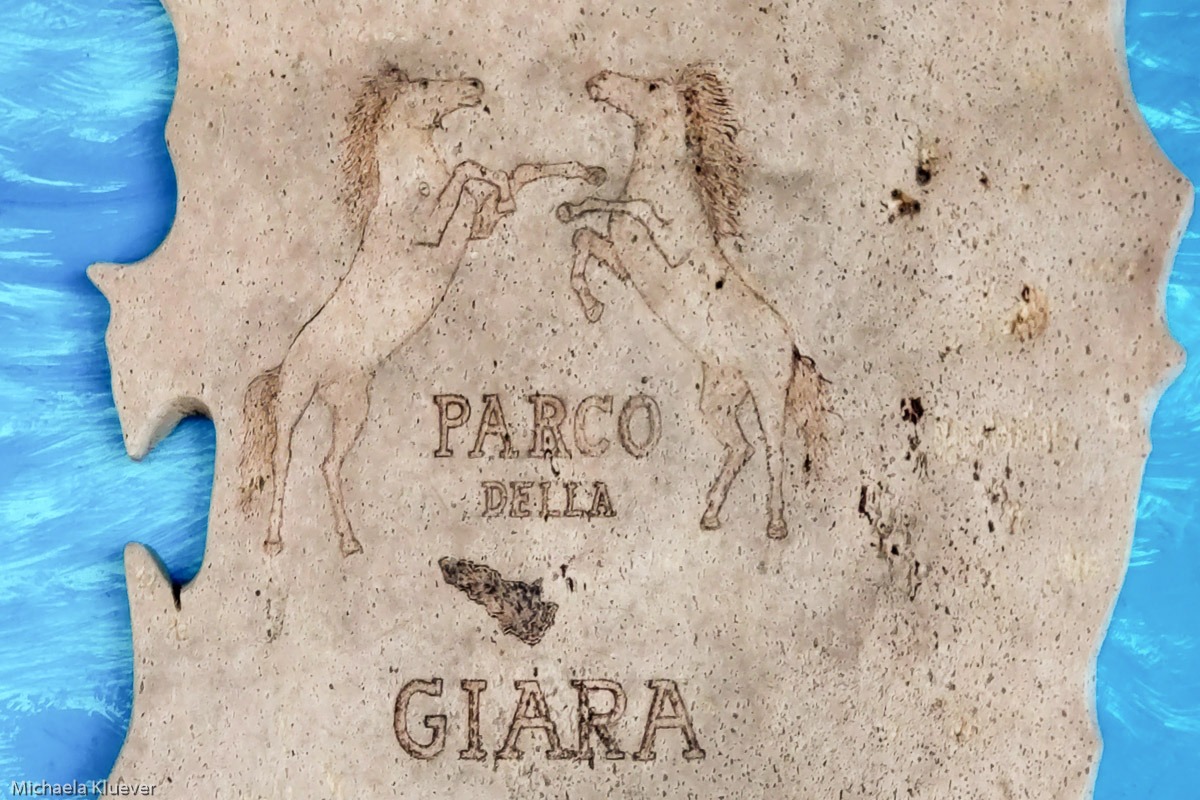
Aiming for rapid motion
Hanging at the entrance was an enormous piece of cork oak bark, decorated with an idealised battle scene depicting two wild horses standing face to face on their hind legs. I thought to myself that I’d love to capture something like that with my lens. One can always dream … 🙂 Most of the time, the horses graze peacefully and without stress together. I tried observing and waiting for the right moment and almost felt a little wicked hoping for conflicts in this peaceful atmosphere. But they are part of the lives of these wild horses.
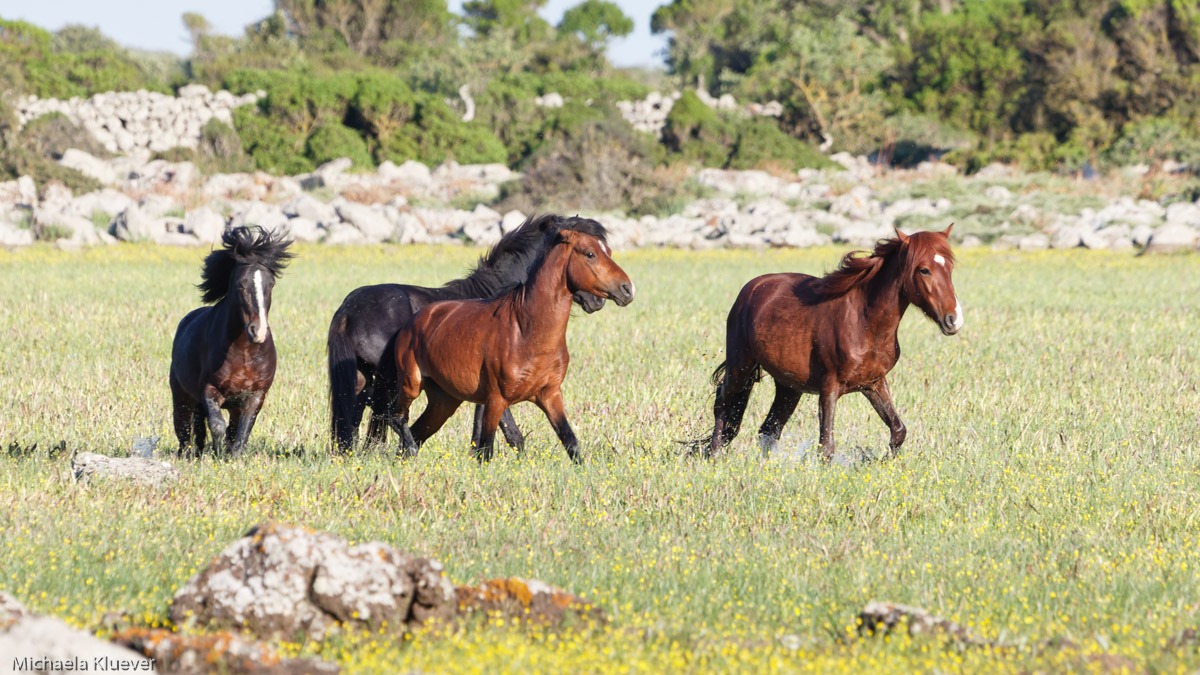
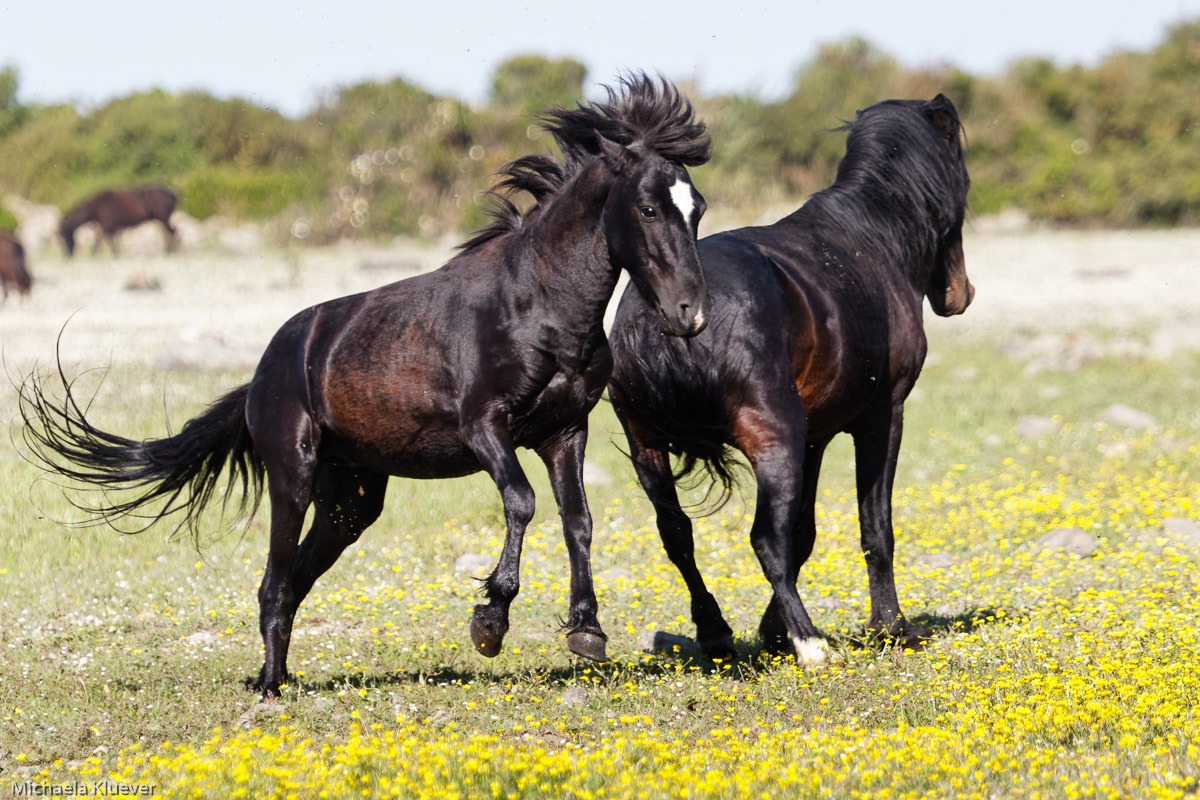
A dominant stallion typically leads a small herd of mares and foals. As the young males reach adulthood, they leave the herd and, after a period of being single, attempt to become the new dominant stallion of a small group themselves. Naturally, the current dominant stallion is not pleased when one of these aspiring stallions approaches his herd. There are signals – neighing, an alert posture, and a lowered head. If the rival persists, he is driven away – or ultimately takes over the herd. The photograph above this paragraph shows the dark dominant stallion shielding his mares from the rival approaching from the left and driving them away. After the mares were safely secured, the rival was driven off.
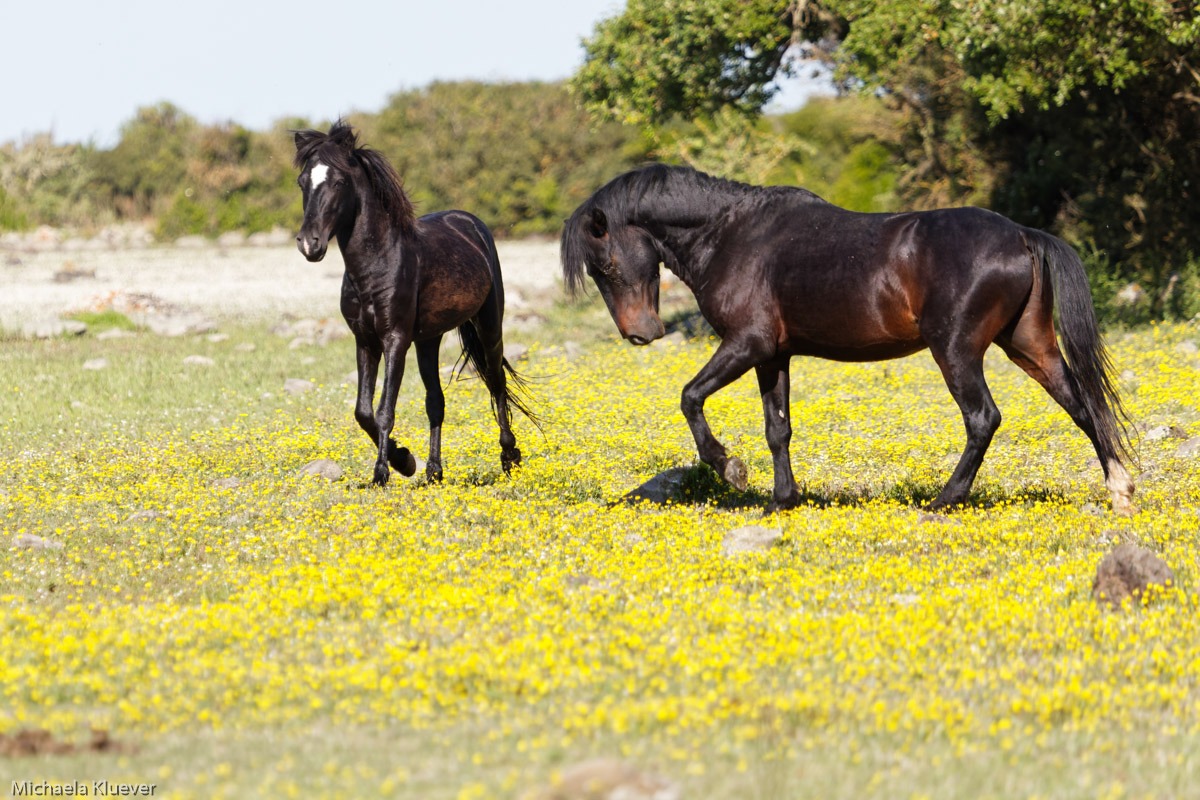
Recognizing the signals of an impending confrontation by observing the herd helps ensure the camera is ready with the correct settings at the crucial moment. Then it happens! The head tilt signals that something is about to happen. The young rival is getting too close to the herd of the dominant stallion. The camera is set to a shutter speed of >= 1/1000s with tracking autofocus. Naturally, it’s taken from a distance; the flying hooves and the dynamic movement are awe-inspiring.
Observing and waiting
In the confrontation captured in the photograph above this paragraph, the dominant stallion prevailed, despite being smaller than his rival. My booklet “I Cavallini della Giara” states that on the plateau, it wasn’t size, but rather skill and agility in combat that were positive evolutionary traits. For the photograph above, I observed the heard for many hours over several days. This meant sitting in the shade under a cork oak, inhaling the scent of cistus, enjoying the landscape, and simply watching them. Grateful to have been able to experience these moments. In doing so, I was able to calmly observe mother-and-foal interactions within the herd.
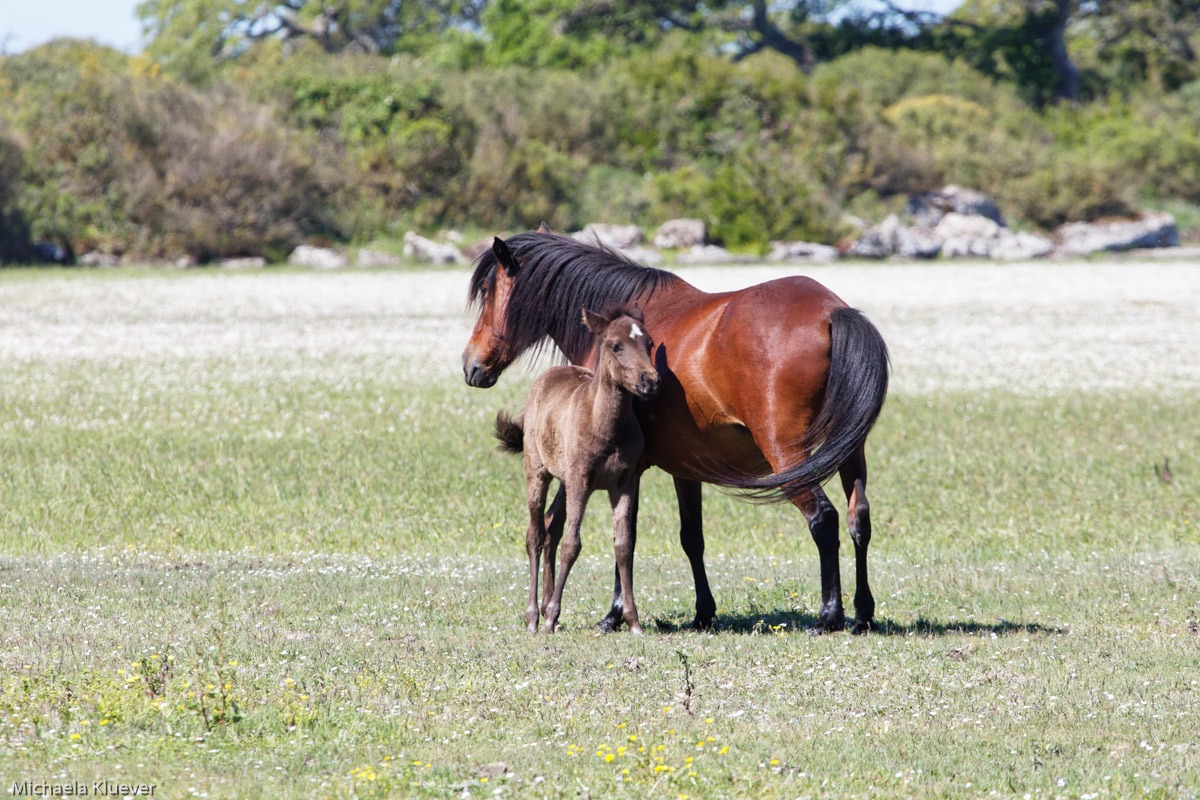
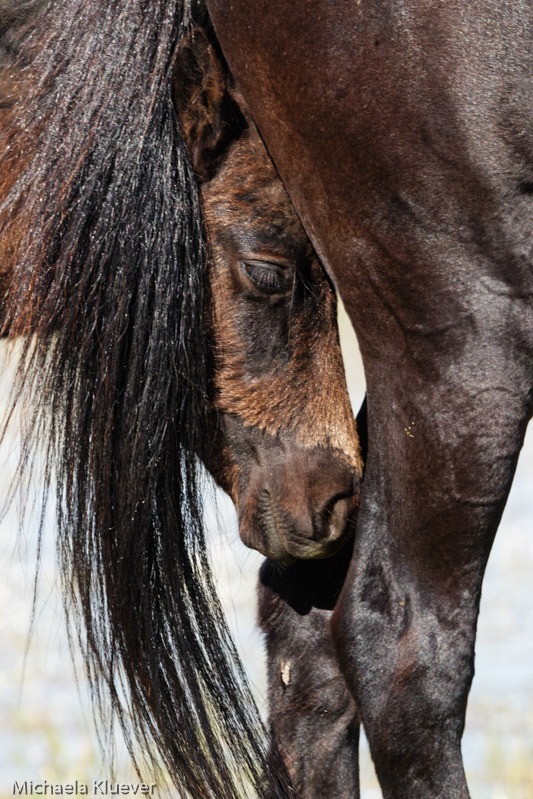
The foals are born in spring and are immediately independent. They follow the adult horses to the marsh meadows and ponds to graze. They are also still suckled. I found it touching to see a tiny foal, bothered by buzzing flies, snuggle up to its mother. She than repeatedly swept the bothersome insects away from its face with her tail.
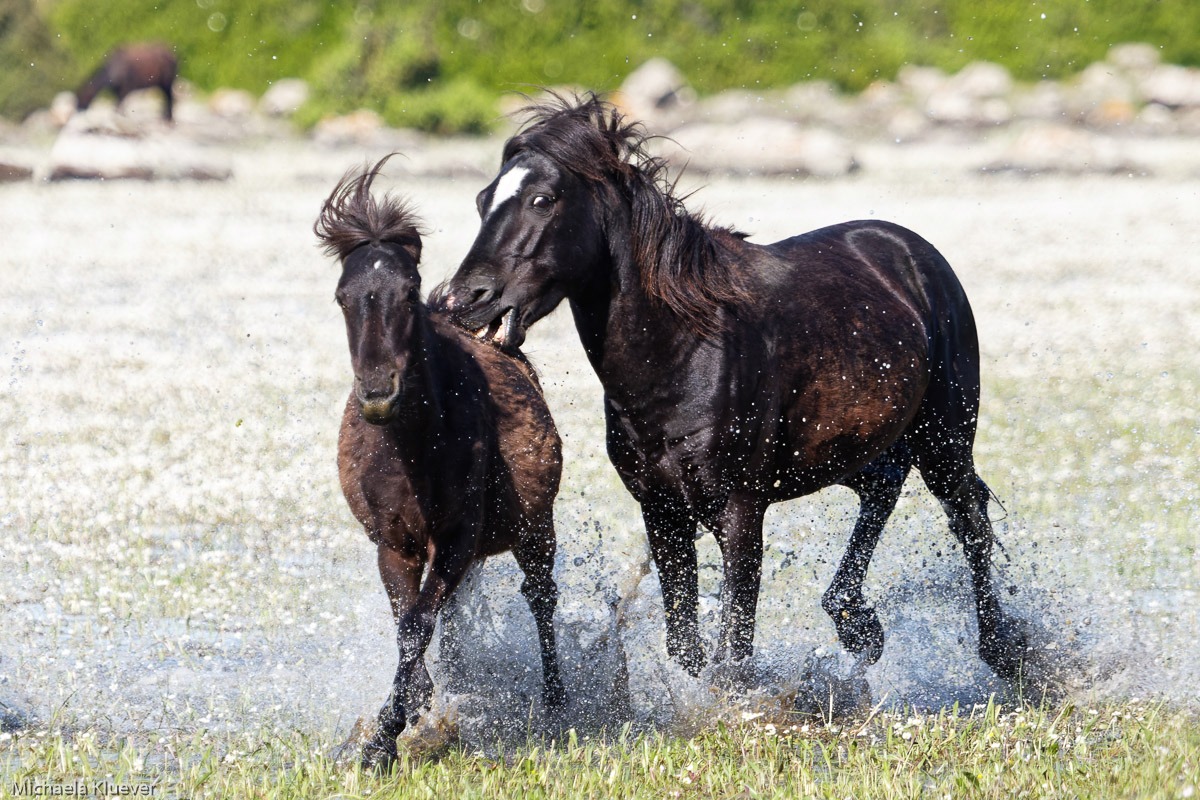
On the other hand I didn’t quite understand what was happening between mother and child in the left photo below. Whether the little one was being bitten, gently nudged, or strongly urged to hurry remains unclear to me. The speed at which it all happened was simply too high. In the photo on the right, taken just a fraction of a second later, the relationship appears quite intimate again.
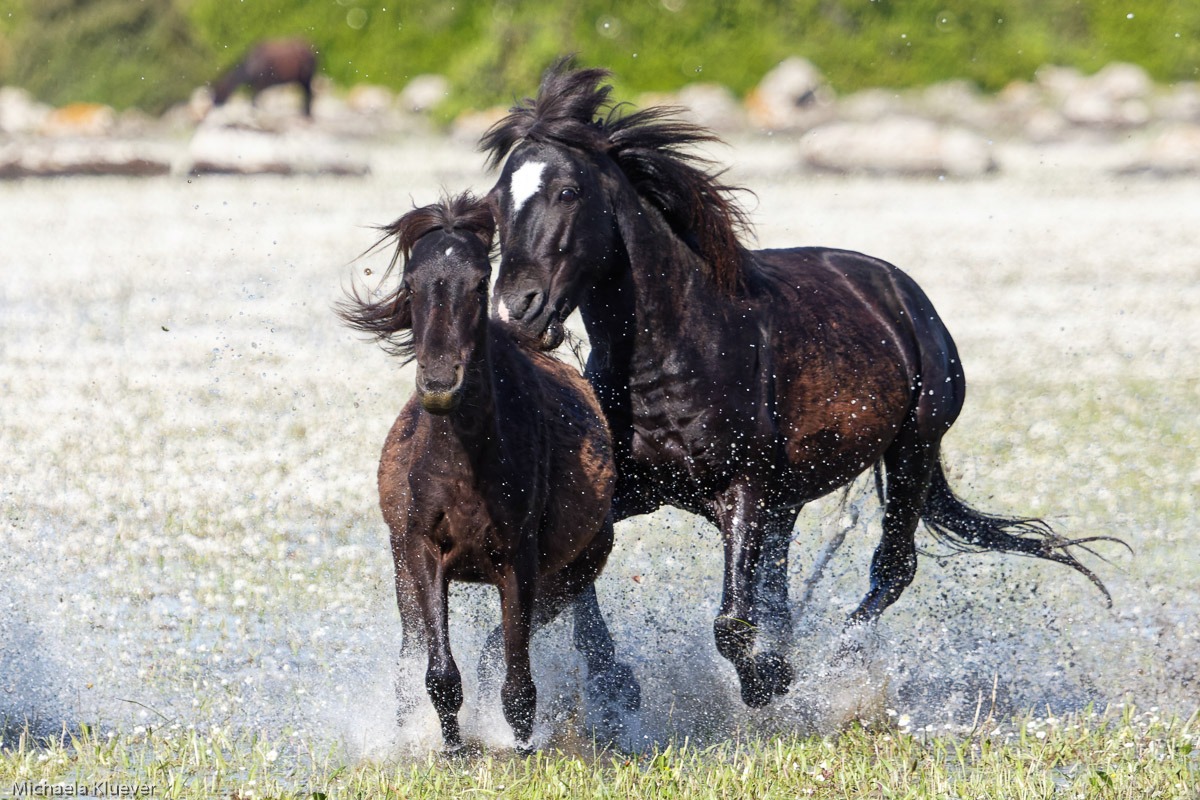
Finally, here’s a gallery with some photos from my recent wild horse excursions. The last four photos were taken by Vittoria Attene, who accompanied me on one of this year’s excursions. Thank you very much, Vittoria! My favorites are numbers 2, 9 and 20. Which one do you like best? I’d love to hear your thoughts in the comments!
Click on a preview image for full-screen view.
Read/write Comments >>